
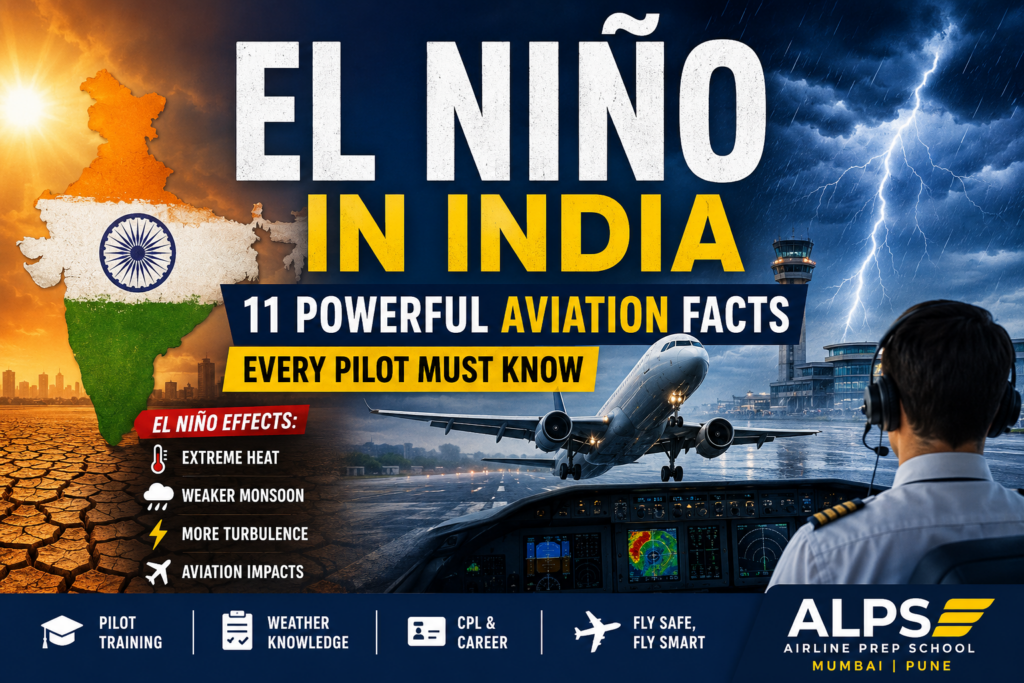
El Niño in India: 11 Powerful Aviation Facts for Pilots
El Niño in India is a climate phenomenon caused by warming Pacific Ocean temperatures that can affect heatwaves, monsoon patterns, turbulence, flight operations, and aviation safety. For aspiring pilots, understanding weather systems like El Niño is essential during DGCA pilot training and airline preparation.
In 2026, India is witnessing rising temperatures, delayed rainfall patterns, and increased discussions around aviation weather disruptions linked to developing El Niño conditions.
Table of Contents
- What is El Niño?
- Why is El Niño Important for Aviation?
- Why is India Experiencing Extreme Heat?
- How Hot Weather Affects Aircraft Performance
- Why Pilots Study Meteorology
- How Airlines Prepare for Weather Disruptions
- How to Become a Pilot in India
- Eligibility Criteria for Pilot Training
- Step-by-Step CPL Process
- CPL vs Cadet Program
- Pilot Training Cost in India
- Career Opportunities & Salary
- Common Mistakes Aspiring Pilots Make
- FAQs
What is El Niño in India?
El Niño is a global climate pattern caused by unusually warm sea surface temperatures in the Pacific Ocean. In India, El Niño can weaken monsoons, increase temperatures, and influence aviation weather conditions.
For pilots and airlines, El Niño impacts:
- Turbulence
- Thunderstorms
- Visibility
- Heatwaves
- Flight planning
- Aircraft performance
Learn more about climate monitoring from the official NOAA website.
Why is El Niño Important for Aviation?
Weather directly affects aircraft operations, fuel planning, takeoff calculations, and passenger safety. During El Niño periods, airlines often experience irregular weather patterns and operational challenges.
| Aviation Area | Impact |
|---|---|
| Takeoff Performance | Reduced aircraft efficiency in hot temperatures |
| Turbulence | Increased atmospheric instability |
| Thunderstorms | Route diversions and delays |
| Fuel Planning | Higher operational calculations |
Aviation weather awareness is a major part of DGCA Ground Classes.
Why is India Experiencing Extreme Heat?
India is currently facing intense heatwaves because of seasonal summer temperatures, climate change, and developing El Niño conditions.
Main Reasons Behind the Heat
- Delayed monsoon patterns
- Weak western disturbances
- Dry atmospheric conditions
- Urban heat buildup
- Global warming trends
Cities like Mumbai, Pune, Delhi, Jaipur, and Nagpur are experiencing above-normal temperatures.
How Does Hot Weather Affect Aircraft Performance?
Hot weather reduces air density. Lower air density means aircraft engines and wings generate less performance during takeoff and climb.
| Condition | Operational Impact |
|---|---|
| High Temperature | Reduced lift generation |
| Lower Air Density | Longer runway requirement |
| Heatwaves | Payload restrictions |
| Strong Winds | Flight path adjustments |
Performance calculations are an important part of Commercial Pilot License (CPL) training.
Why Do Pilots Study Meteorology During CPL Training?
Meteorology is one of the most important DGCA subjects because pilots constantly make weather-related operational decisions.
Topics Covered in Aviation Meteorology
- Pressure systems
- Thunderstorms
- Cloud formations
- Jet streams
- Monsoon systems
- Wind shear
- El Niño and La Niña
Students preparing for DGCA exams can explore the official DGCA website for licensing and examination guidelines.
How Do Airlines Prepare for Weather Disruptions?
Airlines use weather monitoring systems and simulator training to manage operational risks during extreme weather conditions.
Airlines Monitor
- METAR reports
- TAF forecasts
- SIGMET alerts
- Satellite imagery
- Wind charts
Pilot Preparation Includes
- Simulator sessions
- Crosswind landing practice
- Thunderstorm avoidance procedures
- Emergency weather planning
How to Become a Pilot in India?
To become a pilot in India, students must complete Class 12 with Physics and Mathematics, clear DGCA medicals, complete flying training, and obtain a CPL.
Basic Pilot Training Pathway
- Complete 10+2 education
- Apply for DGCA Computer Number
- Clear DGCA Class 2 Medical
- Join Ground School
- Pass DGCA Exams
- Complete flying hours
- Obtain CPL
Read more about the pilot training process in India.
What Are the Eligibility Criteria for Pilot Training in India?
Students must meet DGCA eligibility standards before beginning CPL training.
| Requirement | Criteria |
|---|---|
| Age | Minimum 17 years |
| Qualification | 10+2 with Physics & Maths |
| Medical | DGCA Class 2 |
| English | Basic communication skills |
What is the Step-by-Step CPL Process?
The Commercial Pilot License process combines theoretical training and practical flying experience.
Step 1: DGCA Medicals
- Class 2 Medical
- Class 1 Medical
Step 2: Ground Classes
- Air Navigation
- Meteorology
- Air Regulations
- Technical General
Step 3: DGCA Exams
Students appear for DGCA theory examinations.
Step 4: Flying Training
- Solo flying
- Cross-country flying
- Instrument flying
- Night flying
Step 5: CPL Issue
After completing 200 flying hours, students become eligible for CPL issuance.
CPL vs Cadet Program: Which is Better?
| Feature | CPL Route | Cadet Program |
|---|---|---|
| Flexibility | High | Limited |
| Airline Tie-up | Optional | Usually Included |
| Cost | Lower | Higher |
| Selection Difficulty | Moderate | High |
Explore Cadet Pilot Program preparation with ALPS.
What is the Cost of Pilot Training in India?
Pilot training in India generally costs between ₹45 lakh and ₹70 lakh depending on the flying school and training location.
| Training Component | Approximate Cost |
|---|---|
| Ground School | ₹2–5 lakh |
| Flying Training | ₹35–55 lakh |
| DGCA Exams | ₹50,000+ |
| Accommodation | ₹3–8 lakh |
What Career Opportunities Are Available After CPL?
A CPL opens multiple aviation career opportunities in India and internationally.
| Career Path | Starting Salary |
|---|---|
| Airline First Officer | ₹1.5–4 lakh/month |
| Charter Pilot | ₹1–3 lakh/month |
| Cargo Pilot | ₹1.5–3 lakh/month |
| Flight Instructor | ₹80,000–2 lakh/month |
Students can later pursue ATPL, Type Rating, and advanced airline qualifications.
What Common Mistakes Should Aspiring Pilots Avoid?
Many students delay their pilot careers because of poor planning and lack of proper guidance.
Common Mistakes
- Ignoring DGCA medicals initially
- Delaying exam preparation
- Choosing low-quality training institutes
- Ignoring weather studies
- Underestimating aviation English
Smart Preparation Tips
- Start medicals early
- Focus on Physics and Maths basics
- Practice aptitude tests regularly
- Join structured DGCA classes
FAQs About El Niño in India & Pilot Training
Does El Niño affect flights in India?
Yes. El Niño can influence turbulence, thunderstorms, visibility, and operational weather conditions.
Is meteorology important for CPL training?
Yes. Meteorology is one of the most important DGCA subjects for pilots.
Can I become a pilot after 12th in India?
Yes. Students with Physics and Mathematics can begin CPL training after Class 12.
What is the minimum age for CPL in India?
The minimum age to begin CPL training is 17 years.
How much does a pilot earn in India?
Commercial pilots may initially earn between ₹1.5 lakh and ₹4 lakh per month depending on airline and aircraft type.
Why Choose Airline Prep School (ALPS)?
Airline Prep School (ALPS) provides structured aviation training and career guidance for aspiring pilots across India.
ALPS Offers
- DGCA Ground Classes
- CPL Guidance
- Cadet Program Preparation
- Psychometry Training
- Interview Preparation
- Simulator Exposure
Mumbai Center
B Wing 103, Rassaz Castle, Opp. Gundauli Bus Stop, Near Western Express Highway Metro Station, Malpa Dongri, Andheri East, Mumbai, Maharashtra 400093
Pune Center
Second Floor, Above Ganesh Bhel, Opp. FC College Main Gate, Fergusson College Rd, Shivajinagar, Pune, Maharashtra 411004
Book a Free Pilot Career Counselling Session
If you want to understand:
- CPL pathways
- DGCA exams
- Pilot salaries
- Aviation weather training
- Cadet Programs
Visit Airline Prep School (ALPS) and book your free counselling session today.
You can also attend a demo class at the Mumbai or Pune center and get a complete roadmap for your aviation career.