
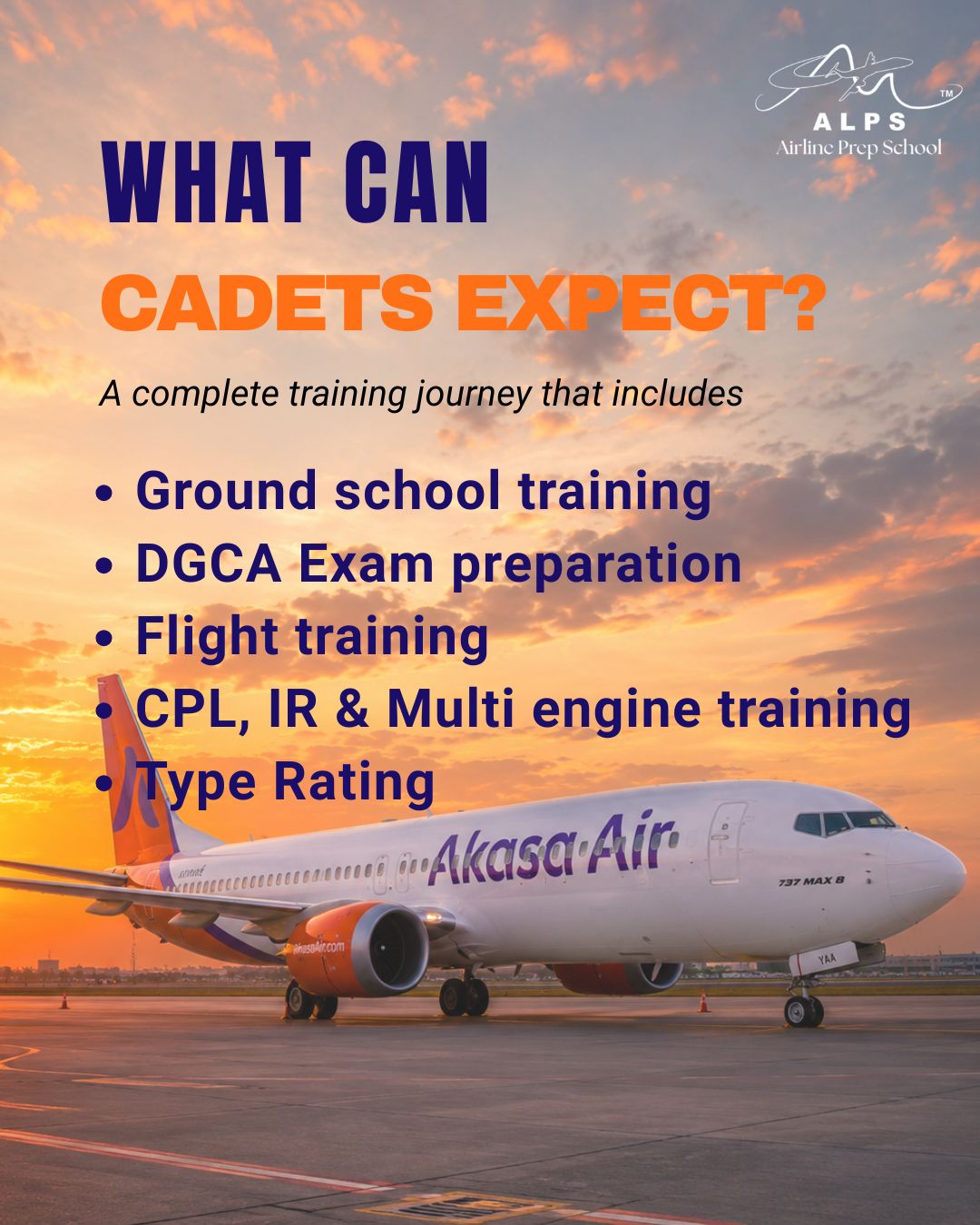
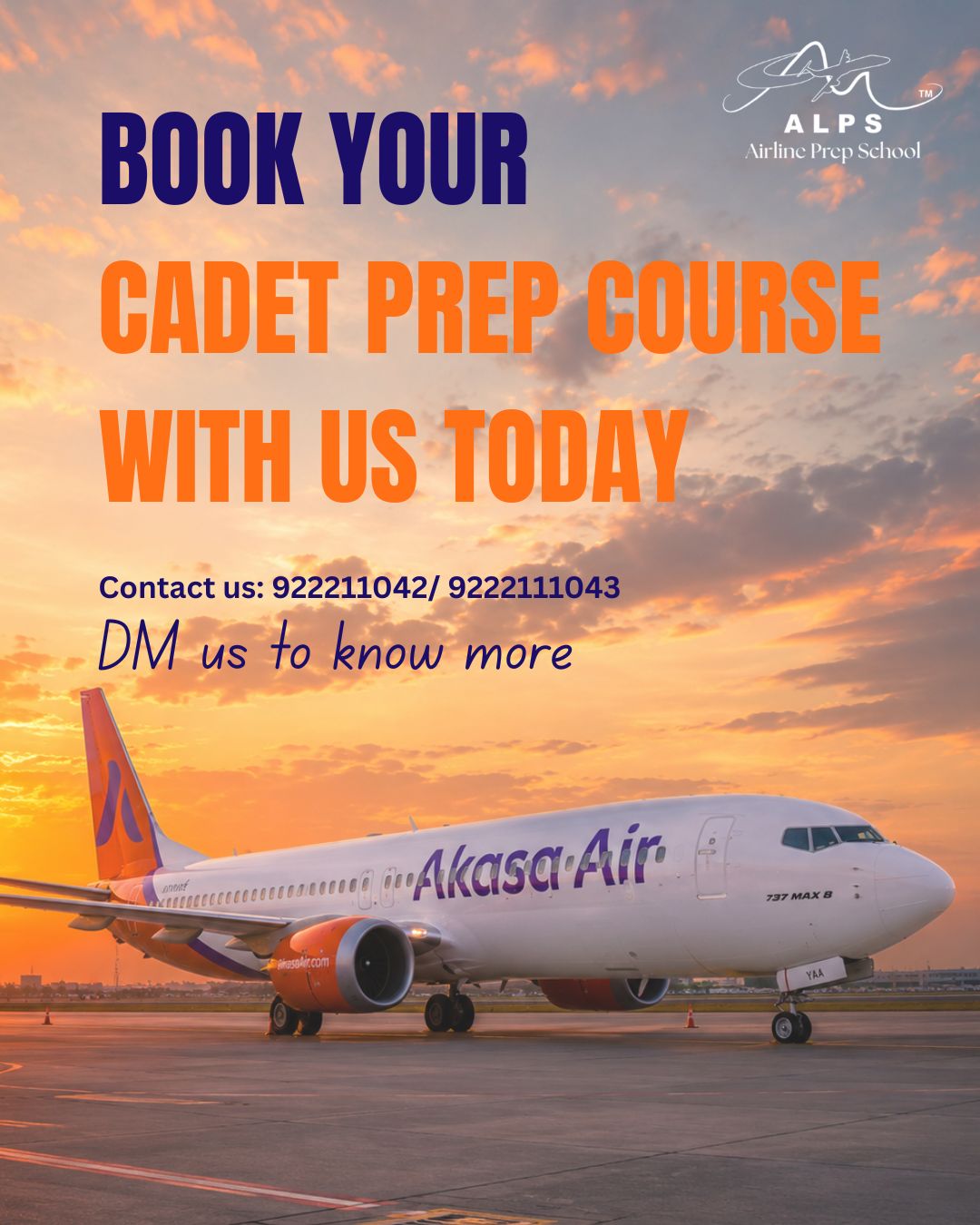
The Akasa Cadet Pilot Programme (officially known as Akasa SkyCadet) is a structured, ab-initio aviation training curriculum that transitions aspiring aviators with zero flying experience into fully qualified commercial First Officers. This fast-track airline program integrates comprehensive ground schooling, flight training for a DGCA pilot license, and a dedicated Boeing 737 MAX Type Rating into a single unified pipeline.
Table of Contents
- What is the Akasa Cadet Pilot Programme?
- How to become a pilot in India via the SkyCadet pathway?
- What are the pilot training eligibility criteria for the programme?
- What is the step-by-step selection process for Akasa SkyCadet?
- What is the realistic cadet pilot program cost breakdown in 2026?
- What is the difference between a conventional CPL vs Cadet Program?
- What are the career opportunities and salary structures at Akasa Air?
- What are the common mistakes to avoid during pilot training applications?
- Can you provide a mock aptitude test for the Akasa Cadet Pilot Programme?
- Frequently Asked Questions (FAQ)
What is the Akasa Cadet Pilot Programme?
The Akasa Cadet Pilot Programme is an institutional partnership between Akasa Air and elite Flight Training Organisations (FTOs) to source, train, and employ future commercial flight crews. The program completely bypasses the post-CPL job hunt by providing a conditional letter of employment before flying training begins.
This specialized initiative targets the massive pilot shortage in India. It secures a highly predictable talent pipeline exclusively for Akasa Air's rapidly expanding aircraft fleet.
- Official Launch Date: June 11, 2026.
- Application Deadline for Intake 1: June 24, 2026.
- Approved Training Partners: Dunes Aviation Academy and Skynex Aero Pvt. Ltd.
- Primary Core Asset Fleet: Multi-engine trainers transitioning into the commercial Boeing 737 MAX fleet.
How to become a pilot in India via the SkyCadet pathway?
To how to become a pilot in India through this specialized route, you must successfully pass an intensive three-phase aviation training pipeline structured according to DGCA guidelines. This path guarantees that all hours and ratings earned strictly conform to commercial jet operational mandates.
Rather than jumping between unrelated flight schools, cadets move through a highly synced, continuous curriculum monitored directly by airline flight operations team managers.
The Three-Phase Training Framework
- Phase 1: Ground School (4 Months): Cadets undergo rigorous theoretical preparation in India to clear the mandatory DGCA commercial pilot examinations.
- Phase 2: Commercial Pilot License Flight Training (18 Months): Students complete a minimum of 200 hours of dual and solo cross-country, instrument, and multi-engine flying at approved domestic FTO facilities.
- Phase 3: Boeing 737 MAX Type Rating (2 Months): Candidates move to advanced multi-crew full-flight simulator bays to master standard operating procedures (SOPs) for heavy commercial jet transports.
What are the pilot training eligibility criteria for the programme?
The pilot training eligibility standards for the Akasa SkyCadet program are tightly defined to filter out candidates who do not possess the baseline academic background or physical health required for a commercial cockpit.
Applicants must verify their educational and physical fitness credentials before submitting paperwork to prevent instant disqualification during the initial document filtration check.
Detailed Eligibility Benchmarks
- Nationality: Must be an active citizen of India holding a valid passport.
- Age Limits: Minimum of 18 years at the time of application; maximum of 40 years at the time of official program enrollment.
- Academic Requirements: Cleared 10+2 board examinations with mandatory passes in Physics, Mathematics, and English.
- Medical Fitness: Must hold a current DGCA Class 2 Medical certificate at application, with the mandatory progression to a DGCA Class 1 Medical certificate prior to starting flight phase operations.
- Background Record: Completely clean criminal record with zero pending legal actions or past academic disciplinary marks.
What is the step-by-step selection process for Akasa SkyCadet?
Securing a slot requires clearing a multi-tiered selection system designed to evaluate cognitive capacity, psychometric stability, and operational aptitude. Professional coaching institutes like Airline Prep School (ALPS) provide targeted simulator and interview prep to master this exact assessment flow.
The selection board filters through thousands of applications using high-tech, computer-driven metrics to isolate top-tier cognitive performance.
The Four Stages of Airline Selection
- Stage 1: Cognitive & Aptitude Screening: Computerized testing of spatial awareness, quick mental math, multitasking abilities, and short-term operational memory.
- Stage 2: Psychometric Evaluation: Detailed personality profiling to check stress tolerance, leadership capability, and safe cockpit decision-making habits.
- Stage 3: Interactive Group Exercise: A collaborative problem-solving round assessing communication speed, dynamic teamwork, and active listening under time pressure.
- Stage 4: Formal Line Pilot Panel Interview: A final face-to-face evaluation by senior Akasa Air flight captains and Human Resource experts.
What is the realistic cadet pilot program cost breakdown in 2026?
The cadet pilot program cost represents an all-inclusive investment that covers end-to-end training up to airline deployment. While traditional flying tracks present cheaper initial base rates, they do not guarantee a commercial job or include advanced jet type-ratings.
Investing in an integrated airline path eliminates the financial risks of unexpected post-graduate training delays, housing transitions, or extended periods of unemployment.
Comprehensive Expense Matrix
| Training Phase Component | Estimated Fee Allocation (INR) |
|---|---|
| Ground School & DGCA Exams Support | ₹2,00,000 – ₹4,00,000 |
| 200 Hours Flight Training & FTO Accommodation | ₹45,000,000 – ₹55,00,000 |
| Boeing 737 MAX Type Rating Training | ₹22,00,000 – ₹30,00,000 |
| DGCA Licensing Fees, Medicals, & Uniform Gear | ₹1,50,000 – ₹3,00,000 |
| Total Estimated SkyCadet Program Cost | ₹85,00,000 – ₹1,20,00,000 (₹85L to ₹1.2 Crore) |
What is the difference between a conventional CPL vs Cadet Program?
Choosing between a standard commercial license track and an integrated airline cadet path requires analyzing financial layouts against ultimate employment certainty. A self-directed CPL leaves all licensing burdens on the individual student, whereas a cadet program streamlines your journey from day one.
The table below provides a detailed structural comparison across major career milestones:
| Parameter | Conventional CPL Route | Akasa Cadet Pilot Programme |
|---|---|---|
| Job Security | Zero Guarantee; requires independent job hunting | Conditional Letter of Employment before training starts |
| Type Rating | Not included; student pays extra post-graduation | Fully integrated into the training timeline |
| Total Cost | Lower initial cost (₹45 Lakhs – ₹65 Lakhs) | Higher initial cost (₹85 Lakhs – ₹1.2 Crore) |
| Fleet Transition | General aviation; no early airline SOP training | Immediate alignment with Boeing 737 MAX operations |
| FTO Assignment | Chosen entirely by the individual student | Pre-vetted and assigned (Dunes Aviation / Skynex) |
What are the career opportunities and salary structures at Akasa Air?
The Indian aviation sector requires an estimated 35,000 new commercial pilots by 2035 due to massive fleet expansions. Graduating from a dedicated airline pipeline ensures swift career progression from junior ranks to long-haul commands.
Pilots operating inside modern fleets experience structured pay scaling alongside rapid command upgrade opportunities.
Pilot Rank and Pay Trajectory
- Junior First Officer: Monthly stipend/salary ranging from ₹1,50,000 to ₹2,00,000 during final line training phases.
- Line First Officer: Earns between ₹2,50,000 and ₹4,00,000 per month based on actual monthly block hours flown.
- Flight Captain (Requires ATPL): Upgrades occur after logging 1,500 total hours and passing DGCA checks, raising monthly pay to ₹6,00,000 – ₹8,00,000.
What are the common mistakes to avoid during pilot training applications?
Many applicants are disqualified early in the selection cycle due to poor planning or systemic errors on their application forms. Training with professional mentors at Airline Prep School (ALPS) prevents these avoidable missteps.
Avoiding administrative oversights and preparing for technical assessments well in advance ensures your profile passes regulatory scrutiny seamlessly.
Critical Errors to Guard Against
- Delaying the DGCA Medicals: Applying without verifying Class 2 or Class 1 medical viability can stop a student with hidden physical conditions from flying.
- Underestimating the Aptitude Test: Treating the computerized spatial and coordination tests as general quizzes often results in low scores.
- Rushing the Academic Documentation: Submitting incorrect verification certificates for 10+2 Physics and Math marks leads to immediate application rejection.
Can you provide a mock aptitude test for the Akasa Cadet Pilot Programme?
The computer-based testing phase evaluates quick critical thinking, multi-axis spatial coordination, and basic physics principles under high time pressure. Below is an authentic structural simulation of the assessment questions used by international pilot evaluation systems.
Section A: Quantitative Reasoning & Mental Calculation
Time limit: 60 seconds per question. Calculators are strictly prohibited.
Question 1: An aircraft is descending at a continuous rate of 800 feet per minute. If the plane passes through 14,000 feet, how many minutes will it take to reach an assigned holding altitude of 2,400 feet?
- A) 12.5 minutes
- B) 14.5 minutes
- C) 15.0 minutes
- D) 16.5 minutes
Direct Answer & Working: B) 14.5 minutes.
Use the linear rate equation: Time = (Initial Altitude - Target Altitude) / Rate of Descent.
Time = (14,000 - 2,400) / 800 = 11,600 / 800 = 14.5 minutes.
Question 2: Your aircraft consumes 42 gallons of fuel per hour. If the remaining onboard fuel tank capacity reads 147 gallons, what is the maximum available flight endurance time?
- A) 3 hours 15 minutes
- B) 3 hours 30 minutes
- C) 3 hours 45 minutes
- D) 4 hours 00 minutes
Direct Answer & Working: B) 3 hours 30 minutes.
Divide total fuel by hourly burn rate: Endurance = 147 / 42 = 3.5 hours = 3 hours 30 minutes.
Section B: Spatial Awareness & Heading Orientation
Time limit: 30 seconds per question. Evaluates 3D visualization skills.
Question 3: Your current magnetic heading is 045° (North-East). The Air Traffic Controller orders you to execute a hard left turn by 135 degrees. What is your new magnetic heading?
- A) 180°
- B) 270°
- C) 090°
- D) 310°
Direct Answer & Working: B) 270°.
Subtract the turning angle from the original heading for a left-hand turn: 045° - 135° = -090°.
Convert negative headings by adding a full circle rotation: 360° - 090° = 270° (Due West).
Section C: Applied Aviation Physics
Time limit: 45 seconds per question. Tests fundamental mechanics.
Question 4: An aircraft maintains a constant True Airspeed (TAS) of 240 knots while flying directly into a steady headwind of 40 knots. What is the total Ground Speed (GS) of the aircraft?
- A) 280 knots
- B) 200 knots
- C) 240 knots
- D) 160 knots
Direct Answer & Working: B) 200 knots.
Headwinds oppose the forward movement of the aircraft relative to the ground. Use the relative velocity formula: Ground Speed (GS) = True Airspeed (TAS) - Headwind.
GS = 240 - 40 = 200 knots.
Section D: Cockpit Cognitive Multi-Tasking
Question 5: Track the following changing flight variables in your head simultaneously:
Initial State: Altitude = 5,000 feet | Airspeed = 150 knots | Radio Frequency = 121.5 MHz
Change 1: Climb 2,500 feet.
Change 2: Reduce speed by 20 knots.
Change 3: Switch radio frequency up by 2.0 MHz.
- A) 7,500 feet | 130 knots | 123.5 MHz
- B) 7,500 feet | 170 knots | 119.5 MHz
- C) 6,500 feet | 130 knots | 123.5 MHz
- D) 7,500 feet | 130 knots | 121.7 MHz
Direct Answer & Working: A) 7,500 feet | 130 knots | 123.5 MHz.
Altitude: 5,000 + 2,500 = 7,500 feet.
Airspeed: 150 - 20 = 130 knots.
Radio Frequency: 121.5 + 2.0 = 123.5 MHz.
Frequently Asked Questions
Q1: What happens if I fail a phase during the Akasa Cadet Pilot Programme?
If a cadet fails to clear the mandatory DGCA theoretical examinations within the allotted attempts or shows unsafe habits during flight training checks, the airline reserves the right to terminate the training agreement.
Q2: Is the training cost funded entirely by Akasa Air?
No. The cadet pilot program cost is self-funded by the candidate. However, selected cadets receive access to streamlined corporate education loan channels through partner banks via their conditional employment letters.
Q3: Do I need a DGCA Class 1 Medical certificate before submitting my initial application?
No, a Class 2 Medical certificate is sufficient to submit the initial application form. However, you must successfully obtain a valid DGCA pilot license compatible Class 1 Medical certificate before commencing your actual flight training phase.
Q4: Can students from non-science streams apply for this program?
No. Candidates must pass 10+2 with Physics and Mathematics. Non-science students must clear these papers through the National Institute of Open Schooling (NIOS) before applying.
Q5: What is the total duration from enrollment to flying as a First Officer?
The entire integrated training path takes approximately 24 months to complete, depending on weather conditions at the flight school and simulator availability.
Take Your First Step to the Commercial Flight Deck
Mastering the intensive entry screening for the Akasa Cadet Pilot Programme requires focused, professional preparation. Airline Prep School (ALPS) provides specialized ground school coaching, psychometric evaluation prep, and computerized aptitude simulation modules to give you a clear competitive advantage.
Visit our state-of-the-art training facilities in Mumbai & Pune!
📍 ALPS Mumbai Hub: 103, B-Wing, Rassaz Castle CHS, Malpa Dongri No.1, Andheri (East), Mumbai - 400093 (Opp. Gundauli Bus Stop / Near WEH Metro Station)
📞 Call: +91 9222111042 / +91 9222111043
📍 ALPS Pune Center: Second Floor Unit, Above Ganesh Bhel, Opp. FC College Main Gate, Fergusson College Rd, Pune - 411004
📞 Call: +91 9461777222