
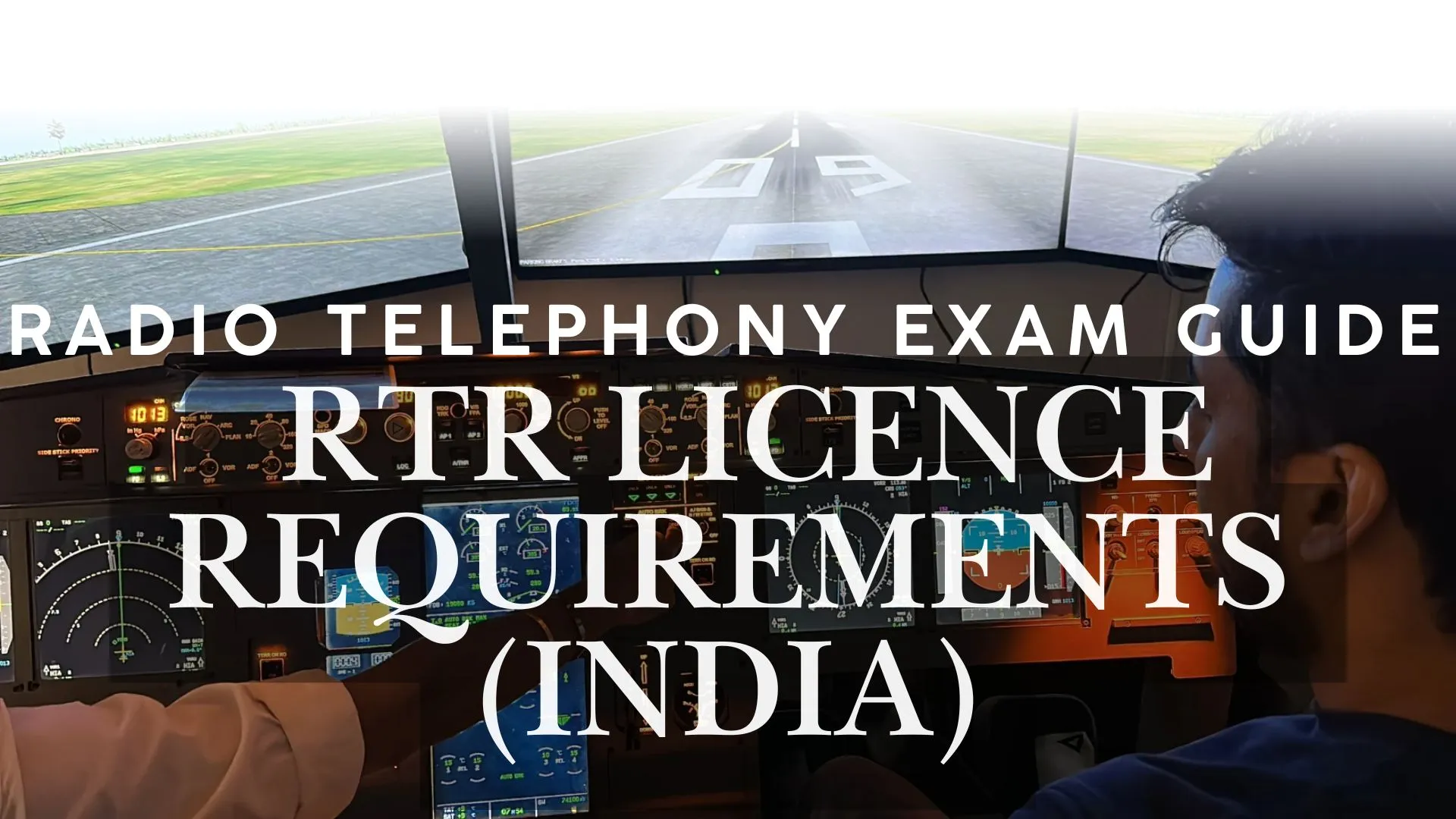
Radio Telephony Exam — Step-by-Step Guide to RTR Licence Requirements
Meta Title: Radio Telephony Exam Guide — RTR Licence Steps (India)
Meta Description: Clear the Radio Telephony Exam (RTR-A) with this DGCA-aligned step-by-step guide. Learn eligibility, syllabus, examples, common errors, and ALPS training.
TL;DR
The Radio Telephony Exam (RTR-A) certifies communication proficiency for pilots in India. It includes a theory test and a practical viva. WPC (DoT) issues the RTR-A, while DGCA provides aviation communication standards. ALPS offers targeted RTR training, mock viva sessions, and complete exam support.
What is the Radio Telephony Exam?
The Radio Telephony Exam evaluates a pilot’s ability to communicate using standard aviation radio procedures. This includes phraseology, emergency calls, radio equipment handling, and correct readback practices. Clearing it is mandatory for anyone aiming to become a commercial pilot in India.
Who Issues the RTR Licence in India?
In India, the WPC (Wireless Planning & Coordination Wing) under the Department of Telecommunications is the authority that issues the RTR-A licence. The DGCA’s communication regulations and ICAO standards are used for the exam syllabus and training framework.
Authoritative External Link:
Department of Telecommunications (WPC) – Official Site
Eligibility & Required Documents
- Minimum age: 16 years
- Education: Class 10 pass or as specified by WPC
- Valid ID proof & passport photo
- Address proof
- DGCA computer number (recommended for pilot candidates)
Step-by-Step Process to Apply for the Radio Telephony Exam
- Create an account on the official WPC/DoT portal for RTR exams.
- Fill in your personal details and upload required documents.
- Select your exam city and pay the examination fees.
- Prepare using DGCA-compliant communication materials and RT phraseology.
- Appear for Part I (written exam) and Part II (viva/practical exam).
- Upon passing, follow WPC instructions to obtain your RTR-A licence.
Syllabus & Exam Pattern
The Radio Telephony Exam consists of two parts. Here is a simple comparison:
| Component | What It Tests | Format | Key Tip |
|---|---|---|---|
| Part I — Theory | Radio regulations, phraseology, distress/emergency calls | MCQs & written responses | Master ICAO standard phraseology |
| Part II — Practical/Viva | Live RT calls, ATC simulation, readback accuracy | Oral examination & simulated radio checks | Speak clearly and confidently with correct phrase usage |
How ALPS Helps You Clear the Radio Telephony Exam
Airline Prep School (ALPS) provides a structured RTR preparation program designed around DGCA/WPC guidelines. Training includes:
- Daily RT phraseology drills
- Mock ATC simulations with real-world scenarios
- Recorded viva sessions for improvement
- Application assistance for WPC registration
- Exam-focused coaching for common error correction
Explore ALPS Training Pages:
- Radio Telephony Training
- Commercial Pilot Licence (CPL) Course
- RTR Rules 2025 — DGCA Exam, Syllabus & ALPS Preparation
Sample Radio Telephony Phrases
Departure Call:
“VT-ABC, Mumbai Tower, ready for departure, runway 27.”
Clearance Readback:
ATC: “Cleared for takeoff runway 27, wind 270 at 8.”
Pilot: “Cleared for takeoff runway 27, VT-ABC, readback correct.”
Common Mistakes Students Make (and How ALPS Fixes Them)
- Incorrect phraseology — corrected through daily drills
- Weak readbacks — improved using call-response exercises
- Unclear voice modulation — fixed with enunciation + breathing techniques
- Wrong frequency usage — fixed with phase-of-flight frequency mapping
Snippet-Ready Q&A
Q: What is the Radio Telephony Exam?
A: The Radio Telephony Exam (RTR-A) certifies a pilot’s communication proficiency. It includes a theory test and practical viva. WPC issues the RTR licence while DGCA provides the aviation communication standards.
FAQs
1. Is the RTR exam mandatory for CPL?
Yes. All commercial pilots must hold RTR-A proficiency to use aviation radios legally.
2. Who issues the RTR licence in India?
The RTR-A licence is issued by WPC under the Department of Telecommunications.
3. What is the format of the Radio Telephony Exam?
The exam has two parts: Part I (written) and Part II (viva/practical).
4. How do I apply for the RTR exam?
You can apply through the official WPC/DoT portal by submitting documents and selecting your exam city.
5. How long is the RTR licence valid?
Validity rules may change—candidates should always check the latest updates on the WPC portal.
6. Does ALPS help with the RTR application?
Yes, ALPS provides complete support for the application, mock tests, and exam preparation.
Conclusion
The Radio Telephony Exam is essential for every aspiring pilot. With expert coaching, mock viva practice, and guidance from ALPS, students can clear both exam parts confidently. Begin early, practice consistently, and follow DGCA/WPC standards for best results.